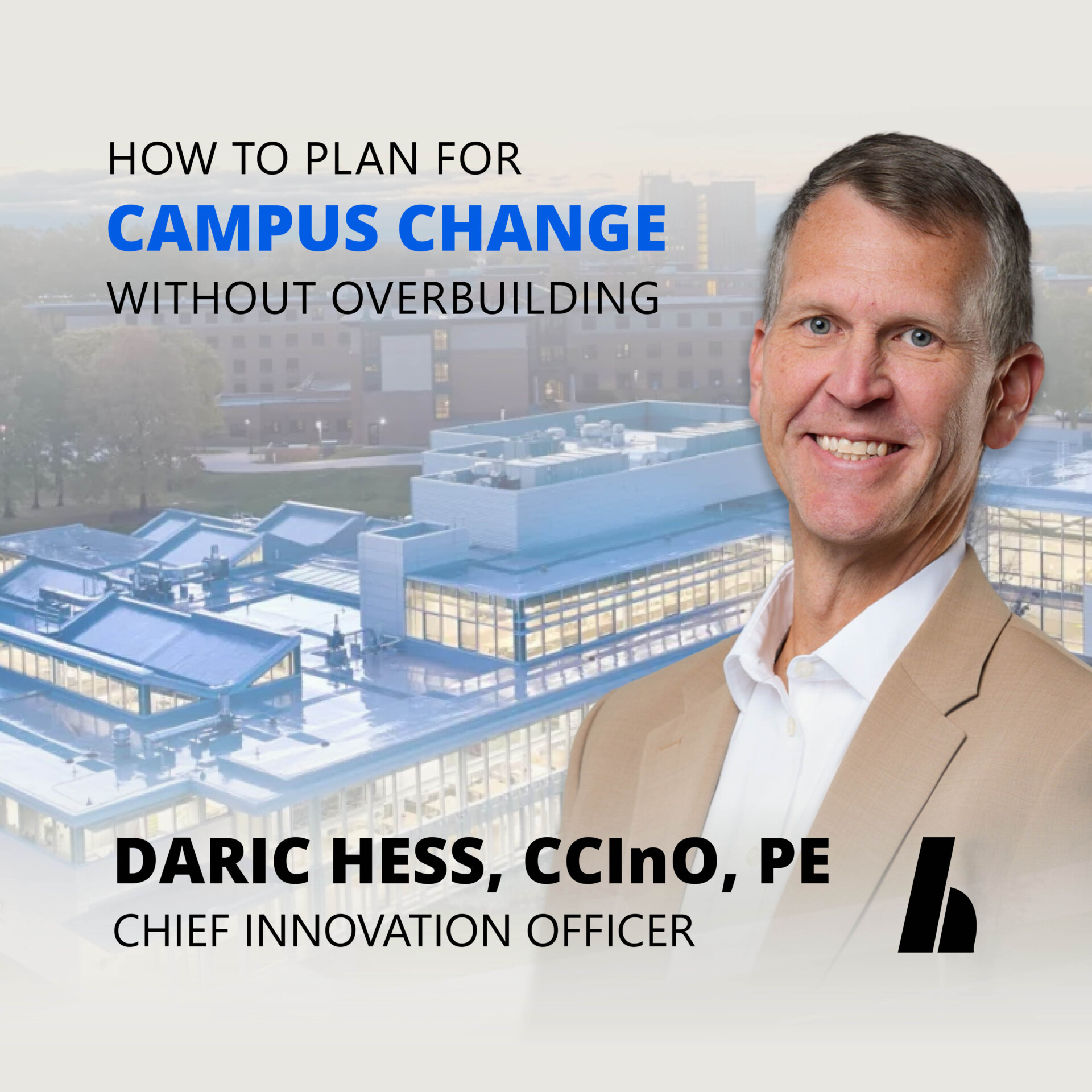
As higher education institutions navigate shifting enrollment trends, evolving academic programs, budget constraints, and sustainability goals, strategic campus planning has never been more important. In a recent University Business op-ed, Daric Hess, Chief Innovation Officer at HEAPY, shares insights on how colleges and universities can prepare for future change without overbuilding or locking themselves into costly long-term decisions.
In the article, Daric challenges the traditional approach of designing facilities around a single use or current need. He argues that today’s campus buildings must be planned with adaptability in mind, allowing institutions to respond to changing academic priorities, emerging technologies, and evolving operational requirements over time.
A key theme of the piece is that flexibility begins during the earliest stages of planning. Rather than treating adaptability as a design feature added later, institutions should make intentional infrastructure and planning decisions that preserve future options. This can include phased development strategies, scalable building systems, and infrastructure that supports future expansion or repurposing without significant disruption.
Daric also emphasizes that flexibility does not mean overbuilding. Instead, thoughtful planning can help institutions align investments with actual demand while reducing future renovation costs and minimizing long-term risk. By bringing together leadership, academic, operational, financial, and sustainability stakeholders early in the planning process, colleges and universities can create facilities that remain relevant and valuable for decades.
As campuses adapt to a rapidly changing higher education landscape, HEAPY is committed to helping institutions build resilient, future-ready environments that balance innovation, stewardship, and long-term value.
Read Daric’s full article in University Business:
https://universitybusiness.com/how-to-plan-for-campus-change-without-overbuilding/ [university…siness.com]