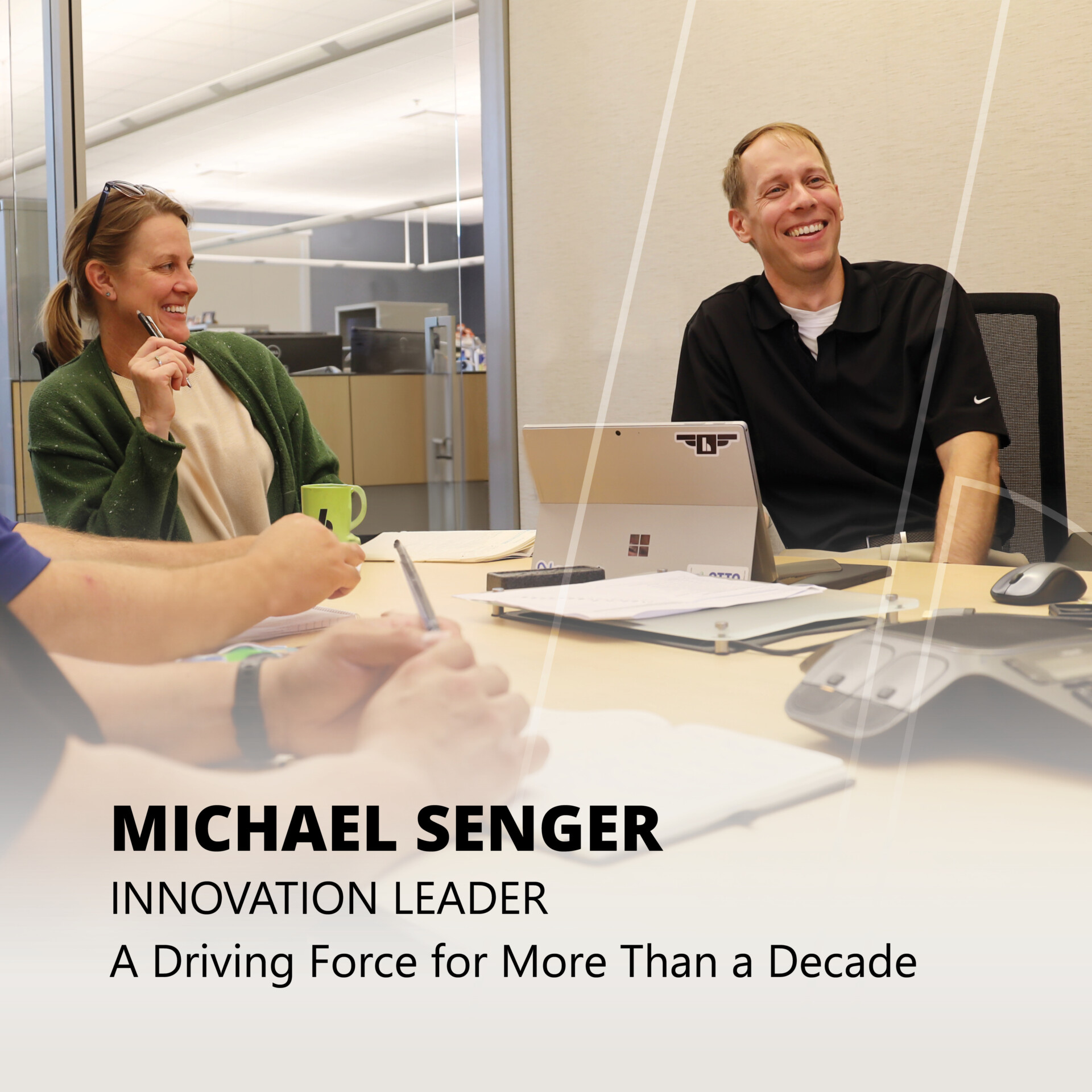
From leading some of Dayton’s first LEED-certified projects to shaping HEAPY’s technical operations, Michael Senger reflects a career of “neat firsts,” collaborative growth, and a passion for pushing boundaries.
Michael Senger, PE, LEED AP BD+C, ID+C, has been a driving force in HEAPY’s sustainability and innovation journey for more than a decade. From leading Dayton’s first LEED for Commercial Interiors project and Miami University’s first LEED for New Construction project to helping shape the firm’s technical operations, Michael’s career is defined by pioneering work, collaborative growth, and a passion for progress. As an Innovation Leader, he continues to push boundaries and inspire new ways of thinking.
The following questions explore his path, insights, and impact.
You led Dayton’s first LEED project at Miami University. What was that experience like, and what made it memorable?
 The first LEED project at Miami University, the Richard T. Farmer School of Business, was a large, high-profile undertaking. The scale was greater than most of the LEED projects I’d done at that point, and the team included nationally recognized firms: Robert A. M. Stern Architects from New York as the signature architect and Moody-Nolan from Columbus as the Architect of Record.
And there I was, twenty-something, essentially telling the design and construction teams how to meet these new requirements! It was surreal and incredibly educational. I was fortunate to work with outstanding professionals who respected my role, taught me a great deal about professionalism, and shared valuable insights into the design and construction of a major building. I’m still proud of that project; it’s a beautiful building that continues to make a positive impact on the Miami campus.
You mentioned having a lot of “neat firsts” during your early LEED work. Can you share a few that stand out?
As the second colleague hired to focus on LEED and sustainable design, I was involved in most of HEAPY’s LEED “firsts” during my early years. As our team grew from two to five, all of us young and new to the industry, we benefited from tremendous support and mentorship from HEAPY’s senior engineers and leaders.
Together, we defined new ways of working, developing templates, processes, and standards for managing and documenting LEED projects, while also integrating sustainability principles into our engineering design process. We revised specifications to reference low-emitting materials, recycled content, and regionally sourced products; standardized lighting and HVAC controls to align with LEED credits; and performed some of HEAPY’s first energy models.
The first LEED for Commercial Interiors certified project in Dayton, Elements IV Interiors, was particularly memorable. It involved renovating an office building for a furniture company north of town. I made lasting friendships and professional connections through that project. I probably blew the budget by attending nearly every weekly construction meeting, but the successful certification became a major marketing highlight for years and helped establish HEAPY as a go-to expert in LEED program management.
Another milestone for me was the Tuttle Construction headquarters in Lima, Ohio, where I designed the HVAC system, completed the energy model, and managed the LEED program. It was my first Variable Refrigerant Flow (VRF) system design, and I learned a great deal about design, construction administration, and working closely with an engaged, hands-on owner. They even featured a quote from me on a deck of company playing cards celebrating their anniversary.
You worked on 30–40 LEED projects in your first decade at HEAPY. How did that shape your approach to design and innovation?
When I joined HEAPY, I had almost no A|E|C industry experience beyond a couple of courses at the University of Dayton. But I knew I wanted to work with the LEED rating system and make a difference through my work.
 Learning design and construction through the LEED lens gave me a holistic understanding of how buildings impact people, economies, and the environment, both locally and globally. Early on, I encountered many seasoned professionals skeptical of LEED, calling it burdensome or unnecessary. But at the Greenbuild conference, a USGBC speaker said something that stuck with me: “We’re not in the building industry; we’re in the change industry.” That helped me frame my perspective and approach skeptics with empathy, helping them see the potential for better practices.
Working in sustainability gave me implicit permission to think differently. It freed me from the “this is how we’ve always done it” mindset. That expectation—that we can always do better—has guided me ever since.
You moved between Team 6, Team 92, and later joined Team 2 with Jason Brown and Gary Eodice. How did those transitions impact your development?
I’ve been incredibly fortunate to work with some brilliant engineers. Alec Carnes, Jason Brown, and Gary Eodice are among the most intelligent people I’ve ever known. Each transition had its own challenges but also tremendous opportunities that shaped my growth.
Working with Alec Carnes and Mark Brumfield on Team 6 was both exciting and stressful. We tackled a variety of projects, including a high-rise hotel with a pool and atrium, an environmental center with a living stream and geothermal well field, office buildings, fire stations, and schools. Through the Hilton Columbus Downtown project, I learned a lot about leading teams, managing workloads, and planning effectively, often the hard way.
Moving to Team 2 with Jason Brown and Gary Eodice, under Ron Chapman, was calmer but equally educational. Jason and Gary brought a thoughtful, analytical approach to design that deepened my technical understanding and appreciation for engineering principles. I also learned how to delegate and lead small teams through complex projects.
Later, rejoining Alec and Ryan Hoffman to lead the LEED and Energy team, and eventually forming the Building Optimization Group (BOG), gave me a chance to apply those lessons as a leader.
What did you take away from those collaborations that still inform your work today?
Beyond valuing expertise and experience, I learned how to lead people, support and guide less experienced colleagues, recognize when someone is struggling, and build structures that reduce stress and promote sustainable workloads. Some of these lessons came from hard experiences, but many came from watching mentors like Alec, Jason, and Gary handle challenges with professionalism and care.
As Alec Carnes launched the BOG practice with Ryan Hoffman, you stepped into a leadership role alongside Matt Downing. What was that transition like?
The launch of the Building Optimization Group was an opportunity to put all my experience into action. Alec and Ryan trusted Matt Downing and me to lead and gave us the freedom to operate as we saw fit. We communicated constantly and faced challenges as a unified team, which helped us integrate two very different groups successfully.
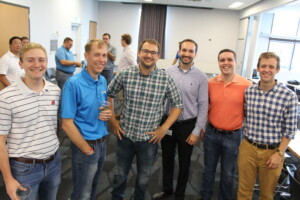 Not long after the merger, Matt and I realized our roles overlapped too much and left some gaps that affected the team. On our own initiative, we mapped out the main responsibilities and decided Matt was best suited for Operations Manager, while I took on the new role of Technical Leader. That structure allowed us to play to our strengths: Matt focused on strategic and organizational matters, and I focused on people and project execution.
With Ryan rounding out the leadership team, we built a strong, balanced partnership that made BOG one of HEAPY’s most productive and successful groups, a legacy that continues today with Stephanie Drenten-Ferro and Nick Pavlak stepping into our former roles.
In your current role as an Innovation Leader, how do you define innovation at HEAPY?
HEAPY has always been an innovator. Long before I joined, our engineers were implementing cutting-edge technologies, from ice storage systems to early use of VFDs and economizers. HEAPY holds license L01 for Trane’s load calculation and energy modeling software, literally the first license issued.
We were early adopters of digital drafting, 3D modeling, and ISO 9001:2015, which became the foundation for the “HEAPY Way” Quality Management System. When Revit became our standard design software, we built custom content and features to enhance its capabilities.
Innovation is embedded in HEAPY’s DNA. Personally, I’ve led initiatives such as introducing OKRs to the company, piloting 360° and peer reviews, and leading our PM team through leadership books like The Five Dysfunctions of a Team and The 5 Languages of Appreciation in the Workplace. As Technical Leader, I championed new tools, processes, and software, sometimes taking the “ask forgiveness later” route, but most of those experiments stuck and improved how we work.
Now, I’m excited to partner with Daric Hess, our new Chief Innovation Officer. Daric is helping bring more structure and process to innovation so we can scale and implement ideas more effectively across the organization. That’s the next evolution of innovation at HEAPY—moving from experimentation to consistent, high-impact execution.
What innovations are you most proud of championing?
If I had to pick one, it would be introducing the Objectives and Key Results (OKR) framework. The fact that leadership embraced it companywide, empowering every colleague to set goals and track their own growth, is deeply gratifying. I can’t take credit for today’s implementation (that goes to Ginger Scherbarth and the HR team), but I love that it’s now part of HEAPY’s culture.
How has your LEED expertise influenced the way you approach innovation today?
LEED helped me connect my personal values around sustainability and stewardship to my professional work. Over time, I came to see how the founders of USGBC and the LEED Rating System gave our industry permission to pursue “better.”
Their story, which began as a small conversation in a hotel room and evolved into a global movement, is inspiring. I may not achieve that level of impact, but I hope my work can inspire others to think differently. Regardless, I know I’ve contributed, and I’m proud of that.
What advice would you give to someone starting in a sustainable design or aiming to become an Innovation Leader?
I never set out to become an Innovation Leader. In fact, this is at least the third position I’ve held that didn’t exist when I started, and probably the third or fourth team I’ve helped create.
My advice is to stay flexible and open to opportunities. Find people, or ideally an organization, that supports your passions, values your unique skills, and is willing to collaborate with you to shape a role or path that lets you contribute meaningfully. That’s where true innovation and fulfillment come from.